The Packaging Forum has partnered up with Plastics NZ and a group of New Zealand organisations with a shared passion for sustainability to establish Good Caps – a pilot programme designed to educate school children about the importance of waste recovery and recycling. Read more here: www.goodcaps.org.nz

To apply, please complete the online form. We’ll be in touch to discuss your application. (For glass-specific projects, please apply above.)

APPLY HERE

PFAS, food packaging

Read the summary on the work regarding PFAS in food packaging

This document is a summary of a recently
commissioned report on the latest research and
information on PFAS in food packaging.


It took months of intensive development to create this recyclable paper packaging that would survive the transportation, merchandising and stocking process. However, the company knew how important this product would be for consumers because of the growing trend in sustainable living.

Soft Plastic Collections
Return to Hamilton

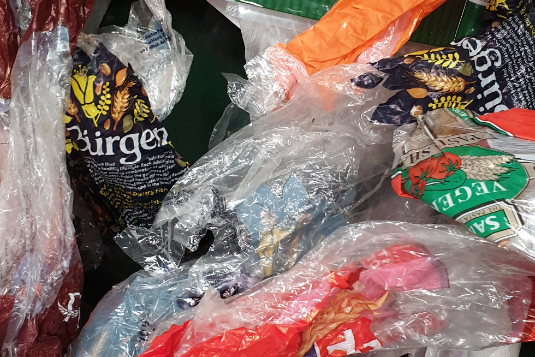
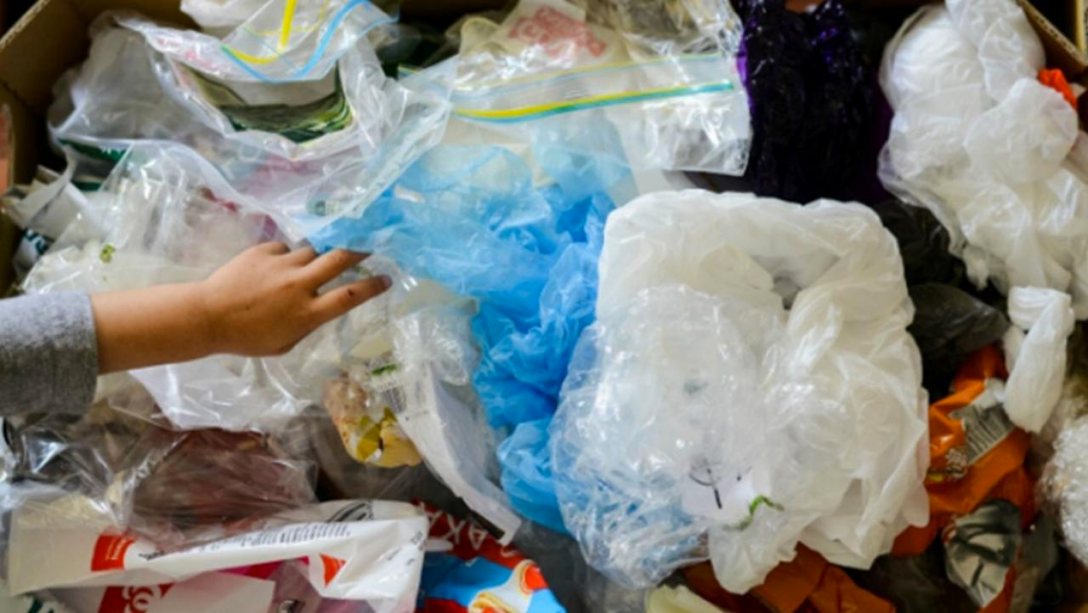
Following the successful re-start of collections across the Auckland region, shoppers in and around Hamilton will be able to drop off their soft plastic packaging from Monday 9th September at nine selected Countdown and The Warehouse stores.
6 September 2019

Malcolm Everts, Soft Plastic Recycling Scheme Chair, says they are very pleased to be extending the service, knowing we now have local processors and scheme partners working to reduce soft plastic waste.

“Since May when we re-started Auckland collections we have helped Future Post turn around 3.5 million plastic bags and wrappers into plastic fence posts.We’re now ready to extend the service out to Hamilton as well as adding four extra Auckland Countdown and The Warehouse stores.”

“This will increase the number of drop off points for consumers to 51 stores and provide a soft plastic recycling service which is accessible to around 40% of the population. It is critical to the scheme’s success that we collect quality soft plastic packaging and that we manage the volumes we collect so that it meets the available processing capacity. The new collection points are Countdown Huntly; Countdown Anglesea Road; Countdown Te Rapa; Countdown Dinsdale; Countdown Claudelands; The Warehouse Te Rapa and The Warehouse City.

“I am also delighted to announce that from October we will re-commence collections at selected Countdown and The Warehouse stores in the Wellington and Hutt Valley region. Soft Plastics collected in the Wellington region will be recycled by2nd Life Plastics into cable covers, garden edging and other products.”

“One year ago, there was no onshore processing of post-consumer soft plastics. Today there are two North Island plants Future Post in Waiuku and Second Life Plastics in Levin which are great examples of Kiwi ingenuity. We are working with them and our members to increase demand for their products. To have a sustainable circular economy where waste materials are re-processed into new valuable products and commodities, we need industry, councils and government departments to start buying products which are made from our recycling efforts.”

“However, the principal limiting factor for our scheme is lack of near shore / on shore processing facilities. It is not a lack of industry support or a lack of consumer willingness to drop off their soft plastic packaging, it is the fact there are currently only two processors in North Island that are able to process post-consumer soft plastics.”

Scheme members’ levies fund collections from stores, quality checks, baling, transport to end markets and contribute to the processing costs as well. This is different from the traditional model where the processor pays the collector/recycler for the materials.

Countdown’s General Manager of Corporate Affairs, Safety and Sustainability Kiri Hannifin says the soft plastics bins being available in even more stores will be welcome news for their customers.

“The further roll out of the Soft Plastics Recycling Scheme to even more of our stores is fantastic news – particularly for our customers who are really passionate about reducing the amount of waste that goes to landfill.

“While we are working hard to reduce plastic in our business, at the moment we still need soft plastics to keep food fresh and ensure food safety. While this remains the case, it is incredibly important to us that we can provide recycling solutions for this type of packaging. We’re incredibly proud to be a part of the Scheme and look forward to supporting it in more of our stores in future.”

David Benattar, Chief Sustainability Officer for The Warehouse Group says they are excited to be extending the collection programme to The Warehouse Hamilton stores.

“We joined the Soft Plastic Recycling Scheme in 2015 because we wanted to minimise the impact of plastic waste on the environment and help Kiwis to be more sustainable. We know the amount of plastic in our environment is of great concern for both our customers and team members. We are exploring every option to significantly reduce the amount of plastic packaging in our own products and we also want to support practical solutions that we can offer to our customers immediately.

“We are grateful for the tenacity of the Soft Plastics Recycling Scheme and Future Post to help us address these issues head-on.”

Customers can check which stores are offering the service on our website store locator.

Food and packaging industry gathers to tackle plastic waste

The biggest players in the New Zealand food and packaging industry met last week (Aug 28) at an industry event to discuss and exchange ideas for ending packaging waste.
2 September 2019

The event, which included the Packaging Forum’s AGM, focussed on innovation in sustainable packaging and providing solutions for consumers.  Speakers included officials from the Ministry for the Environment, who discussed the current work programme on waste which has a strong focus on consumer packaging.

Packaging Forum chair Rob Langford says the Ministry’s recent announcement, for consultation on the proposed declaration of packaging as a priority product under the Waste Minimisation Act 2008, was a major talking point. Product stewardship sees people and business take responsibility for the products they make and sell at the end of their useful life, so that these products are recycled, reused or repurposed. Regulated product stewardship requires the whole of industry to participate.

“Our industry is already leading the charge to find solutions for our packaging at end-of-life, designing out unnecessary packaging, and reducing litter and potential harm to our land and waterways,” says Rob.  “Our current programmes, for soft plastics, glass bottles and jars, and litter via public place recycling are great examples of this.”

“The issues facing our industry are complex and we know collaboration is critical to enable us to meet demand from consumers and the Government for more sustainable packaging.  The industry event is one of the ways we progress this,” Rob says.

“We are also leading the development of new product stewardship programmes for rigid food and beverage plastics.”

The project will accelerate the development of solutions to meet rapid demand from the industry, consumers and government, particularly for problematic plastics 3-7 as well as beverage containers, Rob says. “Through this project, we are developing practical, on the ground solutions for rigid plastics.”

At the event officials from the Ministry for the Environment outlined their work programme around waste, while other speakers discussed recent innovation in packaging and design. These included Future Post, which turns soft plastic and milk bottles into fence posts, and The Better Packaging Company, which talked about working directly with their customers on shared problems and solutions in a circular framework with e-commerce packaging.

Tauranga City Council representatives also spoke about the funding support received through one of The Packaging Forum’s programmes for a kerbside colour-separated glass service which has already doubled the amount of glass being recycled into new bottles and jars via O-I New Zealand.  Industry group WasteMINZ also spoke about their research into compostable packaging.

The Forum has been providing solutions for packaging for a number of years, Rob says. It currently operates the only government-accredited, voluntary product stewardship schemes for glass bottles and jars, and for soft plastics, alongside delivering the public place recycling initiatives such as the Litter Less Recycle More project.

“We were pleased to hear directly from the Ministry about their current work programme on packaging and other related issues such as the waste levy. We know that collaboration between our industry, local and central government, and the resource recovery and waste sector is critical to achieving effective progress,” Rob says.

He called on those not part of the Forum to join in order to foster greater collaboration.

The Forum last year made a pledge on behalf of its members, including manufacturers, brand owners and retailers, to make all their packaging reusable, recyclable or compostable by 2025.

“Addressing these issues is complex, with many aspects to consider, such as the recyclability of different types of plastic, labelling and material definitions, and the role plastic packaging plays in food safety and preventing food waste, but I believe we’re making great progress.

“The Packaging Forum provides a platform for all parties to develop bespoke onshore solutions the envy of the world. Simply transferring methods from overseas leaves us exposed to achieving mediocrity.”

Read The Packaging Forum Annual Report 2018/19 >>

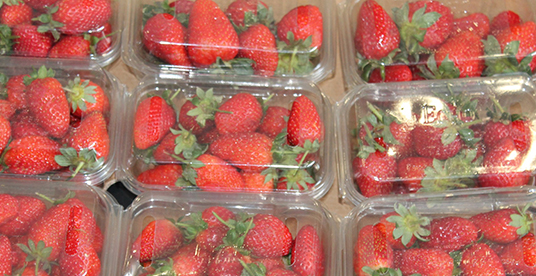
Packaging can reduce food waste in fresh produce

Packaging has got a crucial role to play in reducing food waste in fresh produce, researchers have argued.
27 August 2019

The Australian Fresh Produce Alliance (AFPA) has released research undertaken by RMIT and Empauer that indicates fresh produce packaging can help mitigate the estimated $20 billion of food lost or wasted in Australia every year.

Foodstuffs to allow BYO containers

Foodstuffs, which owns New World and Pak’n’Save, announced it would allow customers to bring their own containers in May.
22 August 2019

Thousands of people are bringing their own containers to supermarkets for meat, fish and salads. Quin told the AM show the business got a lot of positive feedback when it announced the change.

Read more: Newshub article

NZ Post trial recycled paper-based bags

New Zealand Post has begun testing a range of completely recyclable paper-based bags. From 12 August 2019 they began piloting paper-based jiffy bags and flat paper bags in some stores.
12 August 2019

NZ Post allows customers to use BYO packaging but only on certain sized items but is piloting a change to its Parcel Post standard tickets – at a few stores – so customers can have more flexibility on size when using their own packaging.

Read More: NZ Post article